Article: Double Trouble
Double Trouble

Because sometimes one simply isn’t enough.
I have a confession to make. One of something has never been quite enough for me. A beautiful chair catches my eye, but give me two and suddenly I’m rearranging an entire room. A single lamp is perfectly respectable, but a pair? Now we’re having a conversation. Perhaps it’s an occupational hazard, but somewhere along the way, I developed a rather incurable affection for things that come in twos.
And apparently, I’m not alone.
For centuries, architects, decorators, and collectors have been drawn to the pleasing symmetry of pairs. From matching consoles flanking a doorway to candlesticks standing at attention on a mantel, there’s something reassuring about the balance they create. A sense of order, perhaps. Or maybe we simply like the idea that everything has its place, and its counterpart.
But for an antiquarian, the attraction goes a little deeper.
Finding one exceptional antique is always a pleasure. Discovering two that have managed to remain together for a century or more is another matter entirely. Think about it. Through generations of changing tastes, inheritance, house moves, and the occasional family disagreement over who gets what, these two objects have somehow managed to stay together.
That’s no small accomplishment.
Of course, there’s also the rather inconvenient matter of what happens when I actually find a pair I cannot resist.
A single table might fit quite comfortably into the back of a car. Two monumental consoles? Suddenly we’re discussing freight arrangements, measurements, and whether I have completely lost my mind. Fortunately, that last question is one I’ve learned to ignore.
And then there’s the question of where to put them.
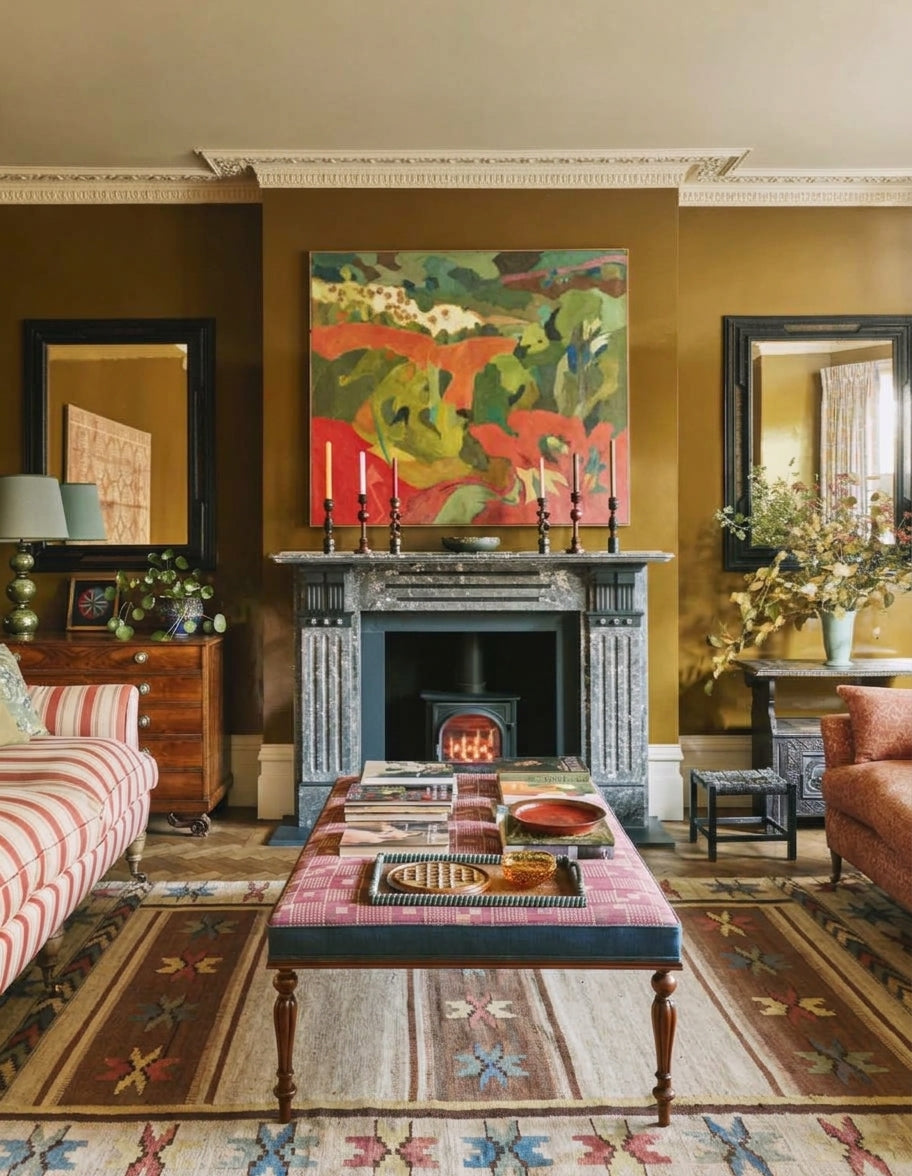
Pairs have a wonderful way of demanding attention. Two chairs can transform an empty corner into a place for conversation. Matching cabinets can lend architectural importance to an otherwise unremarkable wall. A pair of lamps can bring an unexpected sense of calm to a room filled with objects of different periods and personalities.
It’s a curious contradiction. Two identical objects can actually make an interior feel more interesting, not less.
But here’s where I must admit something else.
As much as I appreciate symmetry, I don’t particularly care for rooms that are too perfectly matched. There’s a fine line between balance and predictability, and I much prefer an interior that has a little personality.
Sometimes a pair belongs together, side by side. Other times, I rather enjoy separating them, allowing each to hold its own in different parts of a room. The relationship remains, even when the objects aren’t standing shoulder to shoulder.
After all, even the closest companions benefit from a little independence.
Perhaps that’s what I find most appealing about pairs. They offer a sense of connection without demanding that everything else fall into line. They can be grand or modest, formal or wonderfully eccentric. And whether it’s a pair of 18th-century chairs or two humble objects that have somehow survived the passage of time, there’s something satisfying about knowing they have a shared history.
So yes, I confess. I’m rather partial to pairs.
Do I need two of everything? Certainly not.
But when something extraordinary comes along twice, I find it terribly difficult to say no.
And really, isn’t that where the trouble begins?