Embracing Structure and Setting
Casa Arbolada, Montecito
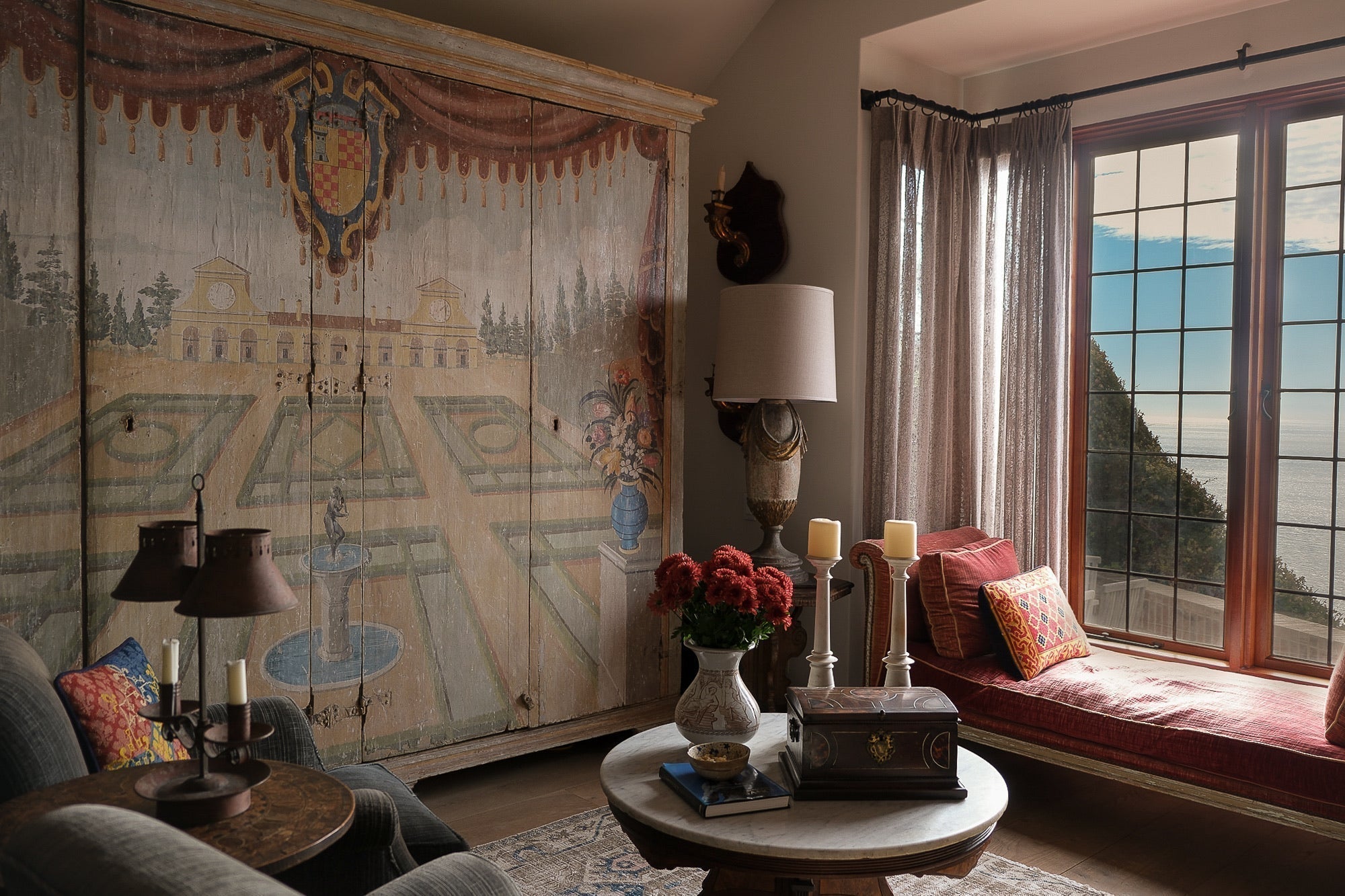
We often speak about antiques in terms of age and patina, but we speak less about the setting that surrounds them. A home has its own character long before any object is placed within it. Architecture sets the tone. It determines whether a room feels delicate or grounded, formal or relaxed.

This was a project in Montecito that was initially intended as a getaway during Covid. However, I became attached and lived there for several years before selling. When I purchased the house, I recognized its strong bones but knew it needed guidance to feel current and to develop a point of view. Exposed beams crossed the dark wood ceilings, which I sandblasted to lighten and modernize. Iron railings framed an open staircase whose treads I envisioned wrapped in leather. The stone fireplace carried a weight that could not be ignored.

The materials were honest and substantial. They introduced a quiet strength that shaped every decision that followed. Surrounded by lush redwood trees in a woodsy setting, I envisioned a mid-century mountain cabin atmosphere and rightfully named the home Casa Arbolada.

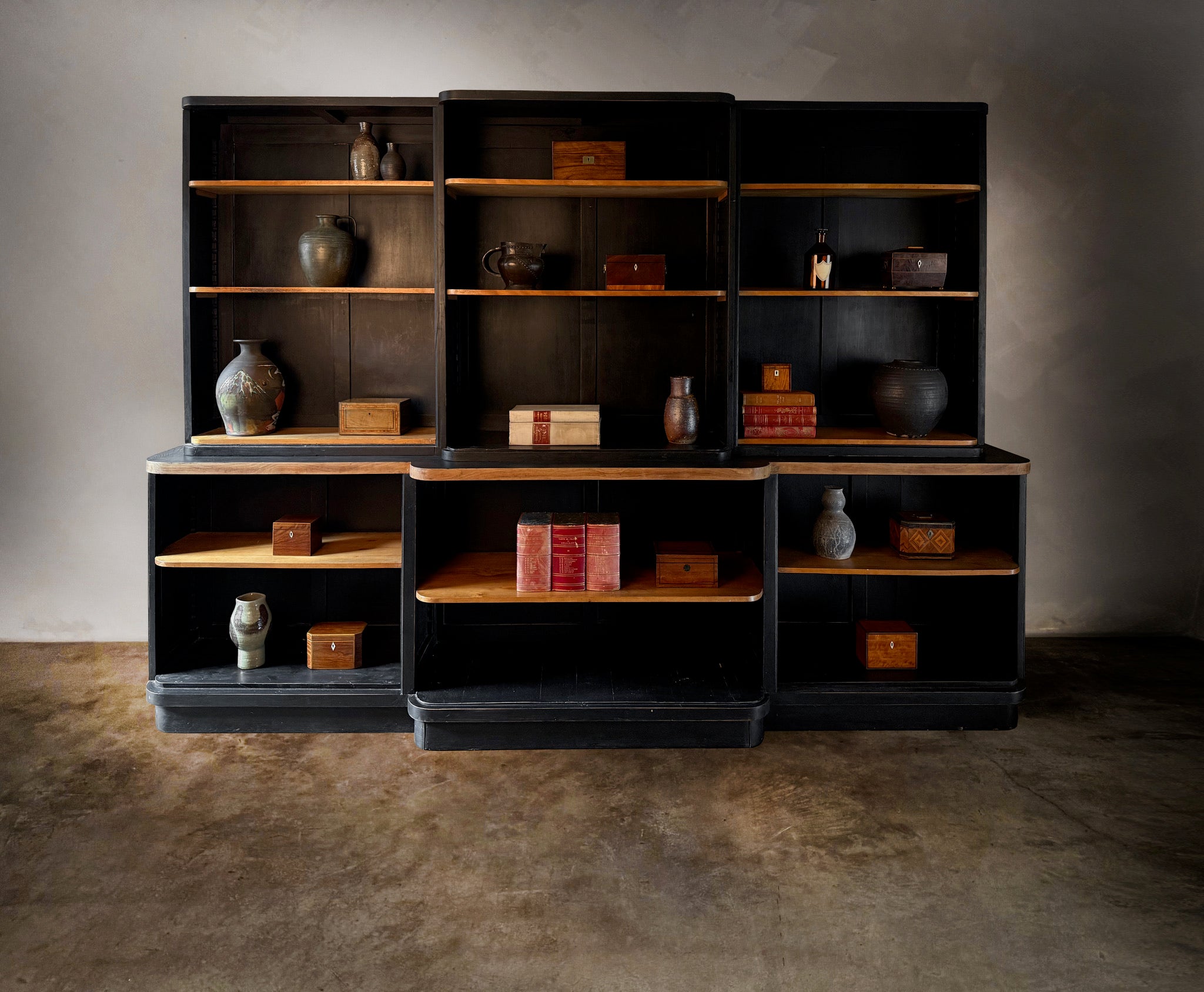
In a house like this, objects behave differently. Furniture feels more architectural. Books paired with antique boxes and selected keepsakes within bookshelves become a part of the structure rather than an accessory to it. Even smaller pieces such as bronzes, boxes, and clock read more clearly when surrounded by clean plaster walls and natural timber.

I have always believed that good pieces adapt to their environment. Academic figure drawings, framed simply in black, felt entirely at home here. Considering the guest bedrooms shared a Jack and Jill bathroom I decided to embrace the term literally and make one guest bedroom masculine and the other one feminine. The furnishings were transitional in nature, allowing for a modern sensibility without sacrificing the historical and classical foundation. The choice of lighting and darker woods of the furniture did not compete with the nature of the home. Furthermore the nature of the home provided a backdrop that allowed the furnishings to stand confidently.


Wood played an essential role in this house. Fresh lumber has a softness and flatness to it, but wood that has been handled, cured, and lived with develops depth. The beams and stair structure at Casa Arbolada were reminders of that evolution. They felt grounded and enduring, welcoming objects from my travels that carried similar character.

Living in this environment required restraint. The rooms did not need to be filled. Space allowed materials to breathe. It allowed silhouettes to be understood. When fewer things are present, each one must contribute. That discipline creates clarity.

Looking back, Casa Arbolada expanded my understanding of how tradition can exist within a more contemporary framework. The house did not soften antiques, it strengthened them. It showed me that when architecture is confident, well-made objects with meaning naturally find their balance within it.